

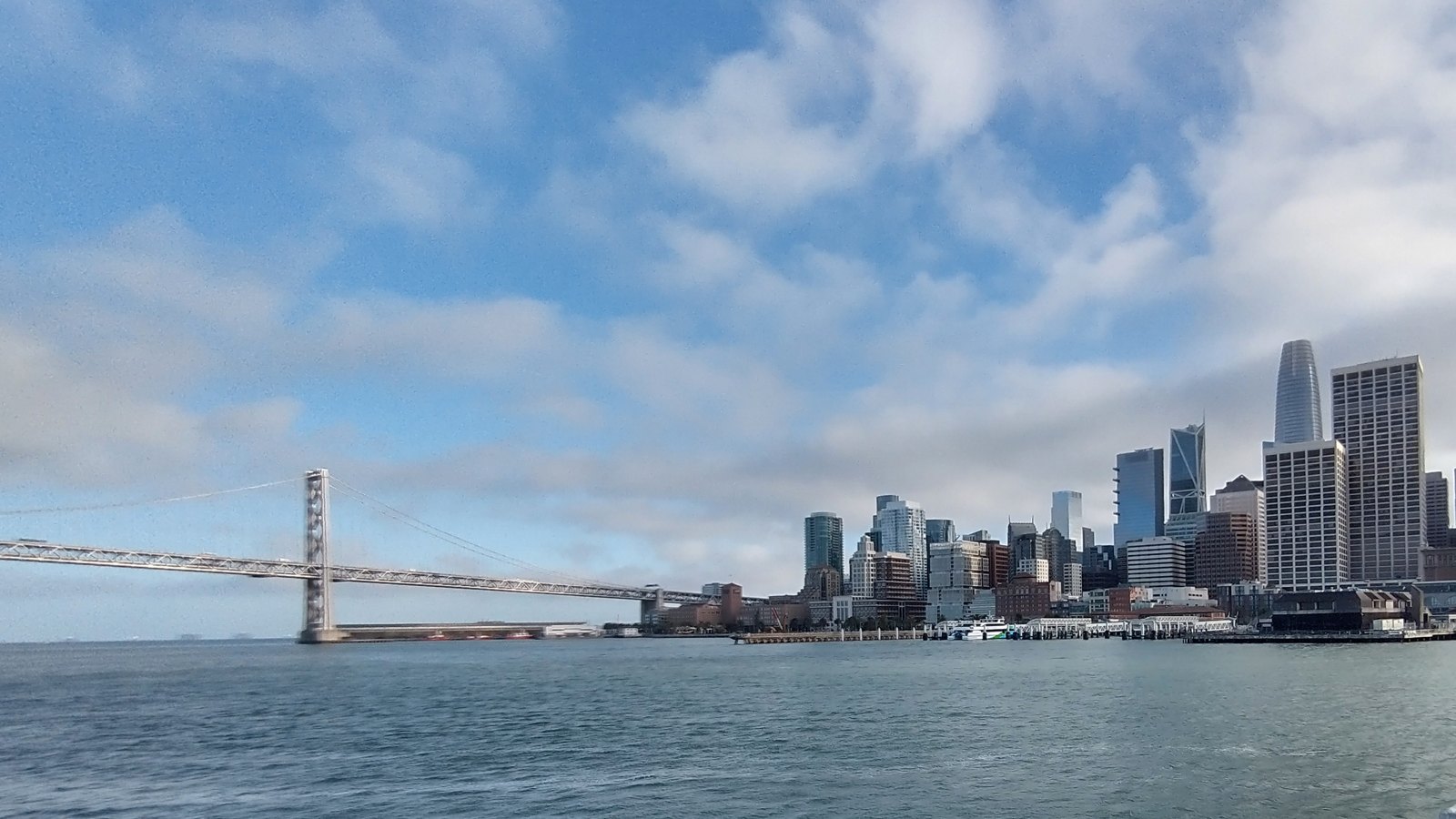
San Francisco has been a consolidated city and county since 1856, when the legislature drew the line across the Peninsula and everything south of it became San Mateo County. Some 874,000 people live in forty-seven square miles.
South of Market — SoMa — is where Marisa closed a sale on Natoma Street, and it is an area people misread. It runs from Market Street down to Mission Creek and from the bay across to the freeway, and it takes in South Park, Yerba Buena, South Beach and the blocks around the ballpark. Almost all of it burned in 1906, so its older buildings are the low and mid-rise masonry lofts, frame dwellings and residential hotels of the rebuilding years rather than Victorians — a surviving pre-1906 house here is the exception. On top of that sit the warehouse conversions and live-work lofts of the 1990s, and then the towers: One Rincon Hill, the Millennium, 300 Spear.
For getting about, the Caltrain terminus is at Fourth and King, the Central Subway's T Third line opened in January 2023 with stops at Yerba Buena/Moscone and Fourth and Brannan, and the BART and Muni Metro stations along Market Street sit on SoMa's northern edge.
The thing that catches buyers out is ownership. A condominium is its own legal parcel, with its own deed and its own tax bill. A tenancy in common — a TIC — is one parcel owned by several people in undivided shares, where who lives in which unit is set by a private agreement that is never recorded, and the whole building gets a single tax bill the owners divide among themselves. TICs are roughly a third of all attached-home sales in the city, and they sell for less for a concrete reason: Fannie Mae will not buy loans on them, so there is no ordinary thirty-year conforming mortgage. You borrow instead from a handful of local portfolio lenders, typically at seventy to eighty per cent of the price and around half a point to a full point above condominium rates, with tougher qualifying. That gap is the discount.
Photo: Alfred Twu, CC0, via Wikimedia Commons

San Francisco, in the questions people ask us.
What is the difference between a condo and a TIC, and why is the TIC cheaper?
A condominium is its own parcel with its own deed and tax bill. A TIC is one parcel owned in undivided shares, with occupancy set by a private, unrecorded agreement and one tax bill for the building. Fannie Mae will not buy TIC loans, so financing comes from a few local portfolio lenders — usually seventy to eighty per cent of the price, at roughly half a point to a point above condo rates. That financing gap is most of the price difference.
Can a TIC be converted to a condominium?
Sometimes, and it changes the value if it can. San Francisco Public Works currently accepts conversion applications for two-unit buildings where both units are owner-occupied, while the expedited program that covered buildings of two to six units is listed as suspended. The rules have changed repeatedly — confirm the position with Public Works before you count on it.
What should I ask for before buying a San Francisco condo?
California law requires the seller to give you the association package: the governing documents, the budget and reserve disclosures, the current assessments and any unpaid amounts, notice of any unresolved violation, any restriction on renting, twelve months of board minutes on request, and the most recent balcony and deck inspection report. Read the reserve study and the minutes first — a coming special assessment shows up there before it shows up anywhere else.

I have held a California real estate license since 1989, and in that time the Bay Area has changed almost beyond recognition. What has not changed is how a good move happens: through someone who knows the neighbourhoods, knows the people, and can make the right introduction at the right moment. I call myself a real estate consultant as well as an agent because most of the job is advice — when to sell, what to fix, which town suits the way you live — and the connections I have made since 1989 are there to be used for my clients.
A consultant, an agent and a connector.
Marisa Roman Wachhorst
